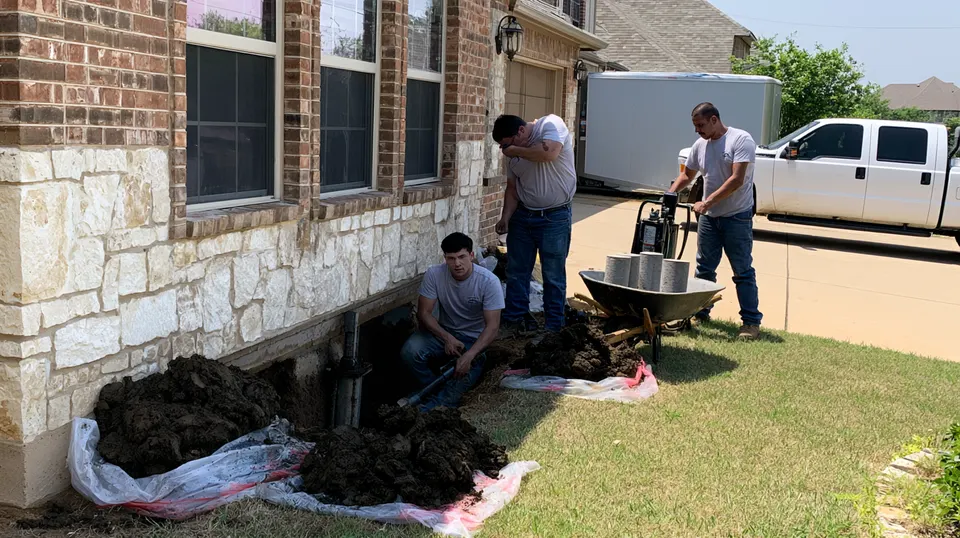
McKinney TX Foundation Repair, Collin County
Foundation Repair in McKinney, TX
Piers, house leveling, crack repair and drainage for McKinney homes built on Blackland clay, with a free written estimate before any work starts.
- Free on-site estimates
- Licensed and insured crews
- Written warranty on every job
- Same-week scheduling
Free estimate
Request a free written estimate
Tell us what you are seeing and a crew lead will call to set a same-week inspection in McKinney. No price is quoted until the foundation has been measured.
Prefer the phone?
Call (972) 555-0100Mon to Sat 7am to 7pm
Foundation repair McKinney homeowners can actually understand starts with a plain explanation of what is moving under the house and why. This site connects McKinney property owners with a licensed, insured foundation repair contractor who inspects the home, measures it, and writes an itemized estimate you keep. Most homes here sit on a concrete slab poured directly on Blackland Prairie clay, a soil the USDA NRCS describes as 40 to 60 percent clay that swells when wet and shrinks when dry. That cycle, plus a wet spring and a dry summer almost every year, is why cracked brick, sticking doors and sloping floors are so common across Collin County. Call (972) 555-0100 to schedule a free on-site estimate, or send the form on this page and a crew lead will call you back.
Foundation repair McKinney homeowners ask for most
Every job starts the same way: a level survey of the floors, a walk around the exterior, a look at the drainage, and a written estimate that lists each pier, each shim, and each drain by count and price. From there the work is matched to the house. A slab home in Stonebridge Ranch and a 1920s pier and beam bungalow near the downtown square need different repairs, and both are handled. The eight services below are the ones McKinney homeowners ask for most.
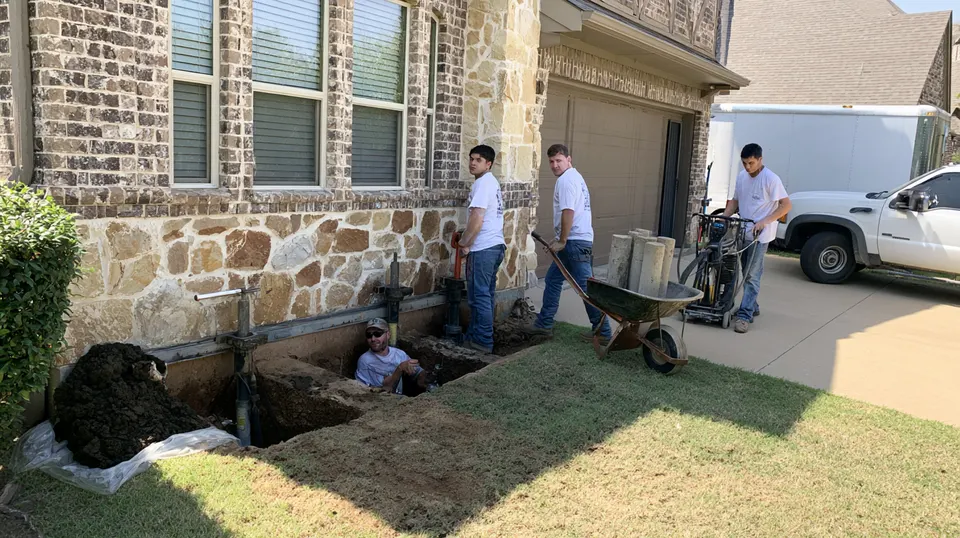
Foundation Repair Services
Inspection, engineered repair plan and piers for slab and pier and beam homes.
Learn more →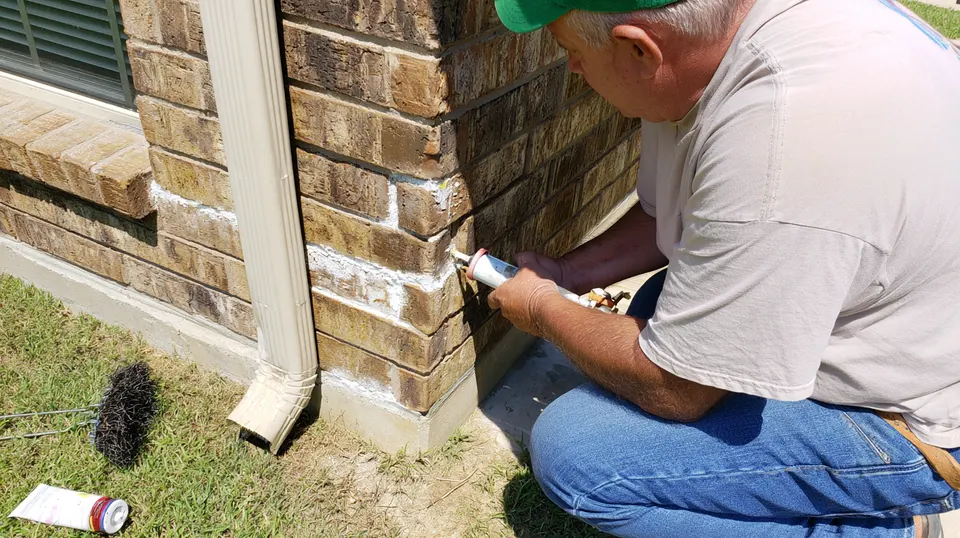
Foundation Crack Repair
Cracks in slabs, brick, drywall and beams, fixed at the cause rather than the surface.
Learn more →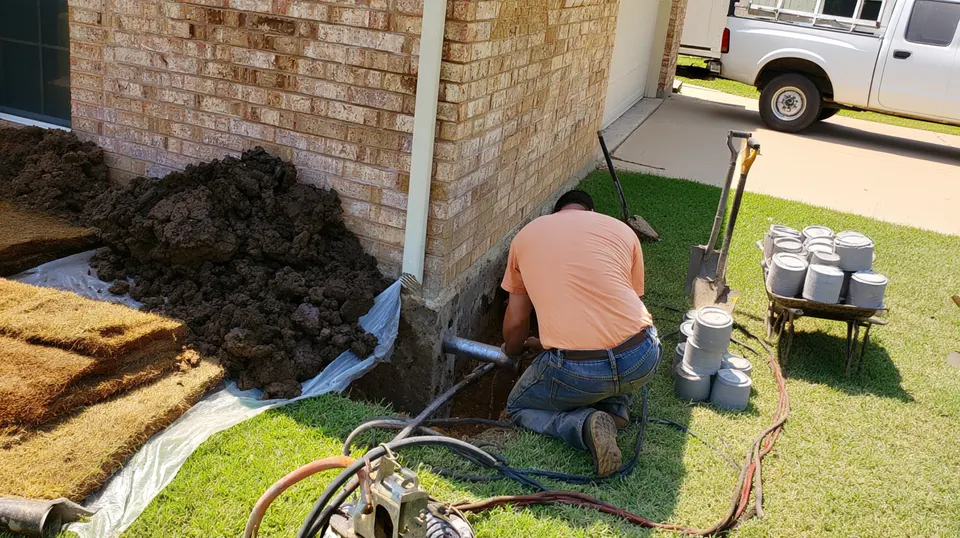
Slab Foundation Repair
Pressed concrete or steel piers driven under a settled slab, then a controlled lift.
Learn more →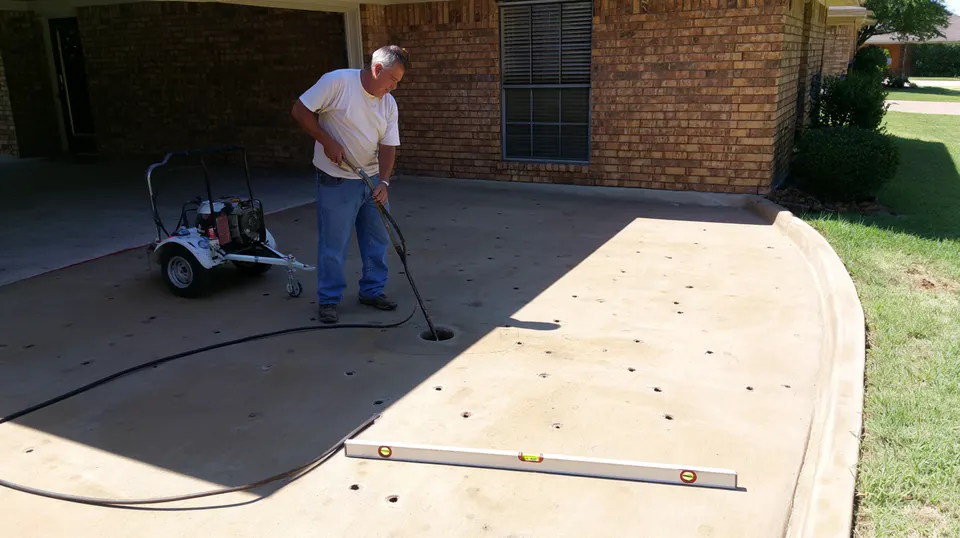
Concrete Leveling
Lifting sunken slabs, patios, driveways and garage floors with grout or foam.
Learn more →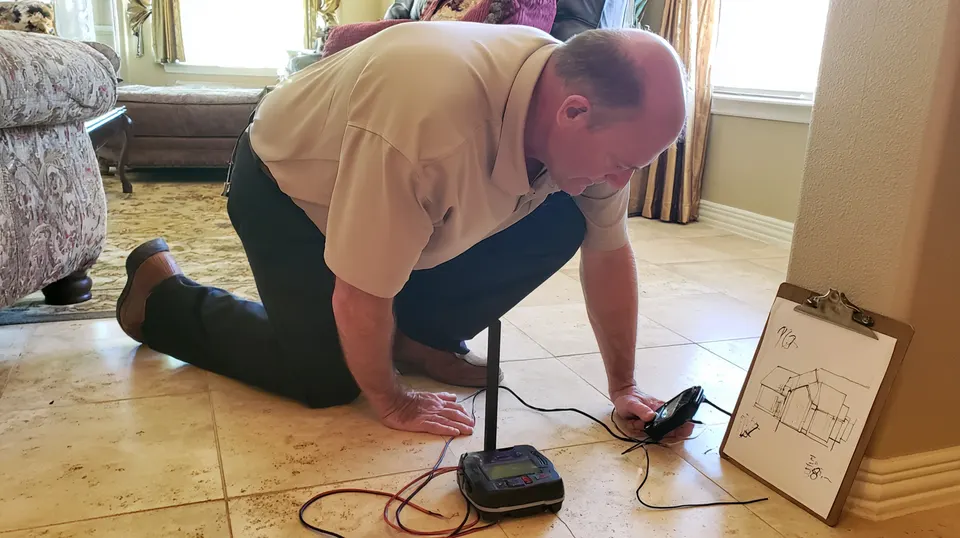
House Leveling
Bringing a settled home back toward level on piers or shims, with readings you can see.
Learn more →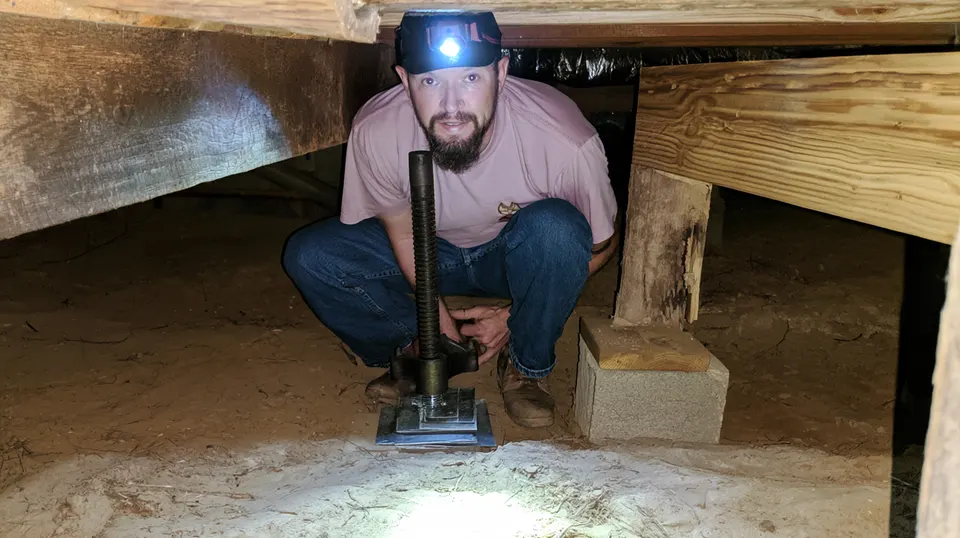
Crawl Space Repair
Beams, joists, moisture and pier work under pier and beam homes.
Learn more →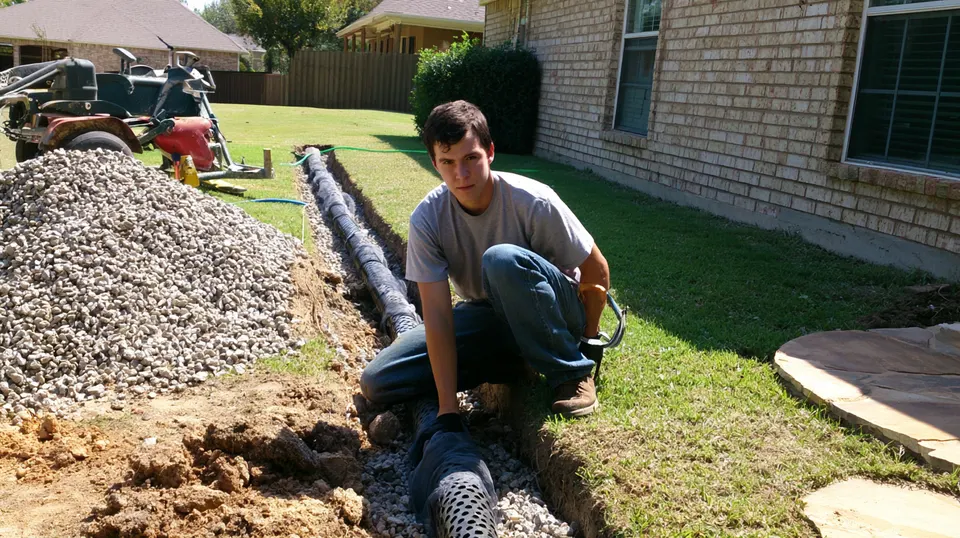
Foundation Drainage
French drains, surface drains and grading that stop water from working on the slab.
Learn more →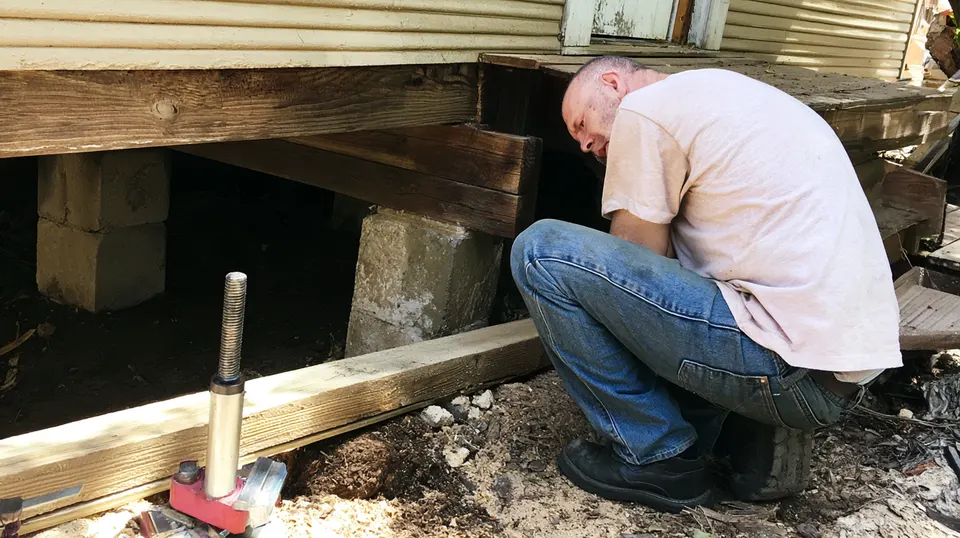
Pier and Beam Foundation Repair
Shimming, sistering joists and new piers for McKinney's older raised homes.
Learn more →Why McKinney properties move
The short answer is the soil and the weather, and the two work together.
The USDA NRCS calls the Houston Black series the Texas state soil. It covers about 1.5 million acres of the Blackland Prairie from north of Dallas down to San Antonio, and the NRCS describes it as the classic Vertisol, a clay that shrinks and swells markedly as its moisture changes. The official series description says Houston Black soils are 40 to 60 percent clay and open cracks 1/2 to 4 inches wide at 12 inches deep during dry periods. The Heiden series, the other big Blackland clay in Collin County, behaves the same way. The NRCS also notes that in metropolitan areas the very high shrink-swell potential of these soils is a common limitation for building sites. That is a federal soil scientist’s way of saying the ground under McKinney is hard on foundations.
The weather drives the cycle. The National Weather Service office in Fort Worth puts normal annual rainfall at DFW Airport at 37.01 inches, with May the wettest month at 4.78 inches and July the driest at 2.08 inches. So the clay soaks up water in spring and swells, then bakes in July and August and shrinks. In drought years the swing is worse. The NWS recorded only 25.88 inches of rain in 2011 and 29.31 inches in 2023, and the summer of 2023 brought just 1.25 inches between June and August. The NRCS points out that water enters Houston Black soil fast when it is dry and cracked and very slowly when it is moist, which means a dry summer followed by a wet fall moves the ground quickly and unevenly.
The houses are the third factor. The 2024 American Community Survey puts the median year built for a McKinney home at 2007, so roughly half the city’s housing is less than 20 years old and sits on stiffened slab-on-ground foundations, the design the Texas Section of the American Society of Civil Engineers says makes up the majority of Texas foundations. Building at Stonebridge Ranch, the master-planned community on the former Flying M Ranch, began in the mid-1980s, and those slabs have been through more than three decades of wet and dry seasons. Older homes around the historic downtown date to the late 1800s and early 1900s and are more likely to sit on pier and beam foundations, which settle differently and are repaired differently.
McKinney at a glance
- McKinney had a 2020 Census population of 195,308, up from 131,117 in 2010, 54,369 in 2000 and 21,283 in 1990. (US Census Bureau decennial counts as reported on Wikipedia, McKinney, Texas, 2020)
- The Census Bureau's population estimate for McKinney is 236,001 as of 2025. (US Census Bureau population estimate as reported on Wikipedia, McKinney, Texas, 2025)
- The American Community Survey 2024 1-year estimate puts McKinney's population at 227,515. (US Census Bureau ACS 2024 1-year via Census Reporter, 2024)
- The median year a McKinney housing unit was built is 2007, so roughly half the city's homes are less than 20 years old. (US Census Bureau ACS 2024 1-year, table B25035, via Census Reporter, 2024)
- McKinney has 85,091 occupied housing units, of which 53,793 (about 63 percent) are owner occupied. (US Census Bureau ACS 2024 1-year, table B25003, via Census Reporter, 2024)
- The median value of an owner-occupied home in McKinney is $555,800. (US Census Bureau ACS 2024 1-year via Census Reporter, 2024)
- The Houston Black series, the Texas state soil, covers about 1.5 million acres of the Blackland Prairie from north of Dallas south to San Antonio and is recognized worldwide as the classic Vertisol that shrinks and swells markedly with changes in moisture. (USDA NRCS, Houston Black Texas State Soil fact sheet (hosted by Texas Water Development Board), 2026)
- NRCS notes that where Houston Black soils occur in metropolitan areas their very high shrink-swell potential is commonly a limitation affecting building site development. (USDA NRCS, Houston Black Texas State Soil fact sheet, 2026)
- Houston Black soils are 40 to 60 percent clay, have high shrink-swell potential and open cracks 1/2 to 4 inches wide at 12 inches deep during dry periods. (USDA NRCS Official Series Description, Houston Black series, 2026)
How it works
There is no charge for the inspection, and nobody quotes a price before the house has been measured. Here is the order of events from the first call to the last signature.
- 1
Call or send a request
Call (972) 555-0100 or use the form. Tell us what you are seeing: cracks, sticking doors, sloping floors, or water where it should not be.
- 2
On-site inspection and written estimate
A crew lead measures the foundation with a level survey, checks the drainage, and writes an itemized estimate you keep. The estimate is free.
- 3
Scheduled work
You get a start date. Most residential pier jobs take one to three days. Landscaping is moved and put back.
- 4
Walkthrough and warranty paperwork
You walk the job with the crew lead, see the post-lift readings, and receive the written warranty and the engineer paperwork if your city required it.
What foundation repair costs in McKinney
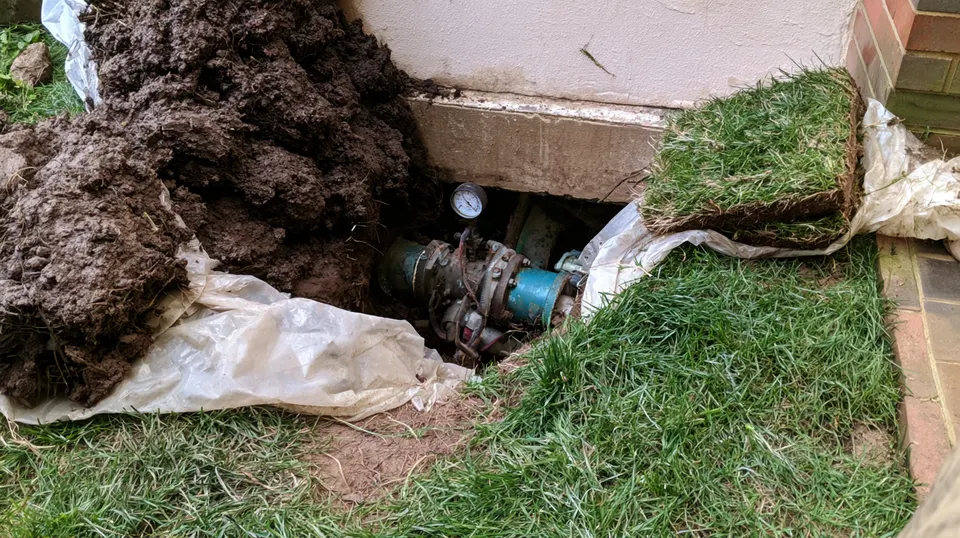
National guides agree closely on the typical range. Fixr’s 2026 guide puts most foundation repairs between $2,200 and $8,200 with a national average near $5,200, and HomeAdvisor’s 2026 guide lands at $2,225 to $8,133 with an average of $5,174. Modernize notes that minimal crack repairs can start around $300 while major structural work can pass $35,000. The spread comes down to how many piers the engineer calls for, whether they go under the exterior beam or under the interior of the slab, and how much landscaping or concrete has to come up and go back.
What it costs
$2,200 to $8,200
Fixr 2026 national range, national average and typical range for all repair types; $1.50 to $12 per square foot, typical $5,200.
$2,225 to $8,133
HomeAdvisor 2026 national range, national average and typical range; low end $500, high end $16,000, typical $5,174.
What moves the number in McKinney: type and severity of damage (cracks vs settling vs bowing), foundation type (slab, pier and beam, crawl space, basement), number and type of piers required, soil conditions and need for a geotechnical report, access, landscaping and concrete removal, structural engineer's report and permits.
All four guides cluster tightly around a $5,000 to $5,200 national average and a $2,200 to $8,400 typical range. HomeAdvisor and This Old House publish nearly identical figures, which suggests a shared underlying dataset. Modernize's high end is slightly wider at $8,400.
Estimates are free, written, and itemized. No price is quoted before someone has measured the foundation.
Every estimate here is free, written and itemized, so you can compare it line by line against any other bid.
Signs a McKinney home needs a foundation inspection
Most homeowners notice the house before they notice the ground. These are the signs worth a free inspection, especially when two or more show up together:
- Doors that swing open or stick shut in summer and behave in winter. See sticking doors and windows.
- Stair-step cracks in the brick veneer, usually near a corner or over a garage opening. See cracks in brick.
- Cracks in drywall that run diagonally from the top corner of a door or window frame.
- Floors that slope toward one side of the house, or a marble that rolls on its own. See sagging floors.
- Gaps opening between the baseboard and the floor, or between a countertop and the wall.
- A slab crack that keeps widening, or a plumbing leak under the slab that was never explained.
- Separation at the roofline or the frieze board where the brick meets the eave.
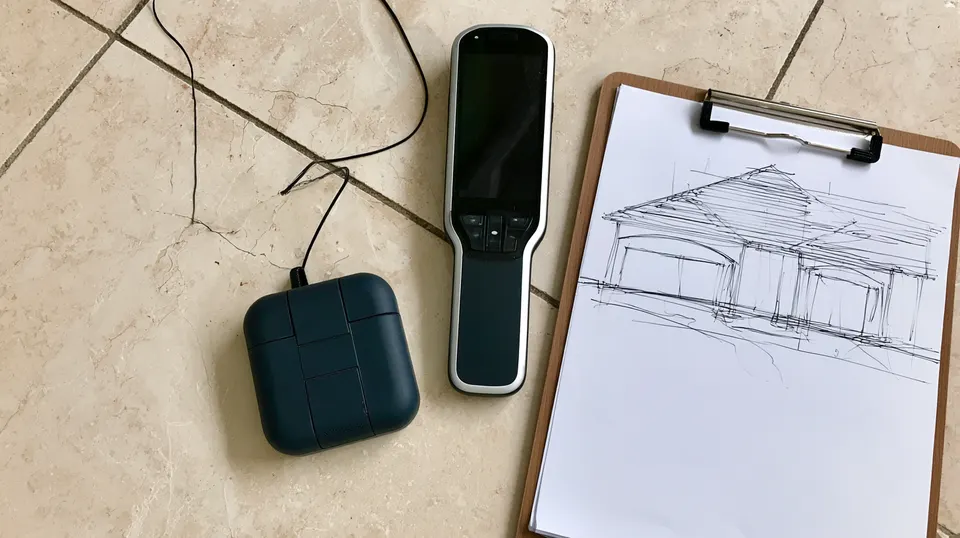
A foundation inspection takes about an hour. The crew lead shoots elevations across the floor with a level, notes every reading on a sketch of the house, and tells you whether what you are seeing is cosmetic, worth watching, or worth fixing now.
Slab and pier and beam homes
McKinney has both, and the repair depends on which one you own. A slab home gets slab foundation repair: piers are driven or drilled under the beam that runs around the edge of the slab, and sometimes under the interior, until they reach soil or rock that does not move. The slab is then lifted back toward level with hydraulic jacks and locked to the piers. Pressed concrete piers, steel push piers and helical piers are the three common types, and the estimate explains which one fits your house and why.
A pier and beam home sits a few feet above the ground on concrete or masonry piers with wood beams and joists between them. Pier and beam foundation repair means shimming the beams back to level, adding piers where the span sags, sistering or replacing rotted joists, and dealing with the moisture under the house that caused the rot in the first place. House leveling applies to both types and is measured in readings before and after, not by eye.
Two other services solve problems that piers alone do not. Concrete leveling lifts sunken patios, driveways and garage slabs that have settled but are not structural. Foundation drainage addresses the reason many McKinney slabs move in the first place: water pooling on one side of the house, soaking that side of the clay, and lifting it while the dry side settles.
Permits and engineering in McKinney
McKinney takes foundation work seriously, and the rules protect you. The City of McKinney Building Inspections department requires a permit for any foundation leveling, pier or footing replacement, shimming or floor system replacement, on slab and pier and beam homes alike. The application has to include a letter and drawings from a Texas-licensed engineer showing the affected areas and whether the plumbing will need a test, and the permit is closed only after the final engineer’s report is uploaded to the city portal. That report is your proof the repair was done to the engineer’s plan.
The engineer matters for another reason. Texas does not license foundation repair contractors; the Texas Department of Licensing and Regulation lists no such program. The engineer’s letter and the written warranty are the two documents that hold a contractor to a standard. The Texas Section of ASCE publishes the Guidelines for the Evaluation and Repair of Residential Foundations, now in Version 3 effective April 1, 2022, and a good estimate follows them.
Service areas across Collin County
Crews are based in McKinney and cover the neighboring cities within about a 25 minute drive, from Allen and Fairview next door to Celina and Anna up the highway. Each area page explains what is different about that city’s housing, soil and permit office.
- McKinney, TXHome base
- Frisco, TX19 min from McKinney
- Plano, TX14 min from McKinney
- Allen, TX8 min from McKinney
- Prosper, TX17 min from McKinney
- Melissa, TX10 min from McKinney
- Princeton, TX15 min from McKinney
- Fairview, TX6 min from McKinney
- Lucas, TX15 min from McKinney
- Celina, TX24 min from McKinney
- Anna, TX17 min from McKinney
If you are searching for foundation repair McKinney can trust, start with a free inspection. Call (972) 555-0100, Monday through Saturday from 7am to 7pm, or send the form and a crew lead will call you back to set a time this week.
Questions homeowners ask
How do I know if my McKinney home needs foundation repair?
Look for doors and windows that stick in summer, stair-step cracks in brick, cracks in drywall over doorways, floors that slope toward one side, and gaps between the baseboard and the floor. One sign alone is not proof. Two or three together are worth a free inspection.
How much does foundation repair cost in McKinney?
National cost guides put most repairs between about $2,200 and $8,200, with a typical job near $5,200 according to Fixr's 2026 guide. The number of piers, access to the affected side of the house, and whether the city requires an engineer's letter move the price. Estimates here are free and written.
Does foundation repair in McKinney require a permit?
Yes. The City of McKinney requires a permit for foundation leveling, pier or footing replacement, shimming and floor system replacement, and the application must include an engineer's letter and drawings. The permit closes after the final engineer's report is filed.
Why do so many McKinney homes have foundation problems?
The soil. The USDA NRCS describes the Houston Black clay under much of Collin County as 40 to 60 percent clay with very high shrink-swell potential. It swells in wet springs, shrinks in dry summers and opens cracks up to 4 inches wide, and a slab riding on top moves with it.
How long does foundation repair take?
Most residential pier jobs in McKinney take one to three days on site. The inspection happens first, then the engineer's letter and permit, then the crew day. Interior piers under a slab add time because the crew tunnels or cuts access.
Is foundation repair really necessary, or can I wait?
Cosmetic hairline cracks can wait and be watched. Movement that keeps growing, doors that no longer latch, or plumbing under the slab that starts leaking should not wait, because settlement rarely reverses on its own and the repair grows with it.
Do you fix pier and beam homes as well as slabs?
Yes. Older McKinney homes near the downtown square and rural homes across Collin County often sit on pier and beam foundations. Those get shims, new piers, sistered joists and replaced beams instead of slab piers.
Sources for local facts on this page
- USDA NRCS Official Series Description, Houston Black series, 2026
- USDA NRCS, Houston Black Texas State Soil fact sheet, 2026
- National Weather Service Fort Worth, DFW Annual Normals, Means and Extremes, 2021
- National Weather Service Fort Worth, DFW Monthly and Annual Precipitation, 2026
- US Census Bureau ACS 2024 1-year, table B25035, via Census Reporter, 2024
- US Census Bureau ACS 2024 1-year, table B25003, via Census Reporter, 2024
- Stonebridge Ranch Community Association, Our History and Our Community pages, 2026
- City of McKinney Building Inspections, General Guidelines for Foundation Repair, accessed Sep 2026
- Texas Department of Licensing and Regulation, tdlr.texas.gov, 2026
- Texas Section ASCE, Recommended Practice for the Design of Residential Foundations, Version 2, 2007
- ASCE Texas Section, Texas Residential Foundations Guidelines page, texasce.org, 2022
- Fixr, 2026
- HomeAdvisor, 2026
- Modernize, 2026
Free estimate
Get a free written estimate in McKinney, TX
A crew lead measures the foundation, explains what is moving and why, and hands you an itemized estimate you keep.
Call (972) 555-0100Mon to Sat 7am to 7pm